Welcome statement
“Parting Words from Moristotle” (07/31/2023)
tells how to access our archives
of art, poems, stories, serials, travelogues,
essays, reviews, interviews, correspondence….
What’s not to like
still, 10 years later?
By Jack Cover
Originally published
on March 11, 2013
By Donald Munro
[Editor’s Note: We re-run this today in recognition of the recent opening of The One-Act Play That Goes Wrong. We have been unable to find a review, so we can’t report whether whatever was supposed to go wrong did.]
Biblical proportions
By Morris Dean
I can’t remember another Russian film I’ve seen recently, but if there are others of the caliber of Leviathan (2014, directed and co-written by Andrey Zvyagintsev), I would like to see them. The setting is the fictional Russian town Pribrezhny, for which serves the actual coastal town of Teriberka, whose shores are littered with the hulls of broken boats and the huge skeletal remains of a whale, which seems to be the symbolic touchstone of the film’s title. It might even be a reference to the whale in the Book of Jonah, because the film abounds in biblical and Orthodox Christian references: encounters with clergy of the Orthodox Church, a church ruin where teenagers gather to drink, away from their parents, and, especially, an explicit comparison of the central character, Kolya, to Job.
A thin line between innocence and evil
By Morris Dean
We almost didn’t watch it this evening: Beasts of No Nations (2015, directed and screenplay written by Cary Joji Fukunaga). The tagline on Netflix, which bought the film’s distribution rights for $12 million, described it:
A problem
By Rolf Dumke
In “Shakespeare in Modern English?” [New York Times, October 7], James Shapiro rightly discusses a main problem in both British and American Shakespeare productions, “that even the best directors and actors...too frequently offer up Shakespeare’s plays without themselves having firm enough grasp of what his words mean.”
And clap, clap, clap!
By Morris Dean
I was still awake this evening after my wife and I watched the conclusion of "Blue Lightning" from BBC Scotland's 2014 TV serial Shetland, so I said, "Want to start to watch this thriller with Liam Neeson?"
Elmore Leonard would have loved this movie
By Morris Dean
Life of Crime isn't the title of anything Elmore Leonard wrote, but the movie (2013, directed and written for the screen by Daniel Schechter) sure has some Elmore Leonard characteristics: sardonic humor, true-to-life dimwits, bad luck, plans gone awry, cozy inevitability. And Schechter's screenplay seems to embody something Elmore Leonard wrote in his essay, "Elmore Leonard's Ten Rules of Writing":
Some thoughts
By William Silveira
Publishing is a field of endeavor that is suffering from lack of readers. But HarperCollins Publishers has managed to pull profits not only from a book that was published 50 years ago, but also from another book, written by the same author (and initially rejected by publishers), that preceded the book published 50 years ago.
Hitler and the end of the Third Reich: A reflection on our condition
By Bob Boldt
The other night [some years ago] I decided to watch a couple of opening scenes from a rented video, Downfall [Der Untergang, 2004], before dropping off to sleep. Big mistake. The movie gripped me from the first frame and wouldn’t let me stop watching until it had run its last credit. I cannot imagine they actually, finally made a movie like that about Hitler. I’m sure that it took all these years’ distance from the real events to allow the perspective that permitted the portrayal of characters in all their humanity and not as the predictable cartoon cardboard cut-out monsters we have been fed ad nauseum.
Acting commendations
By Morris Dean
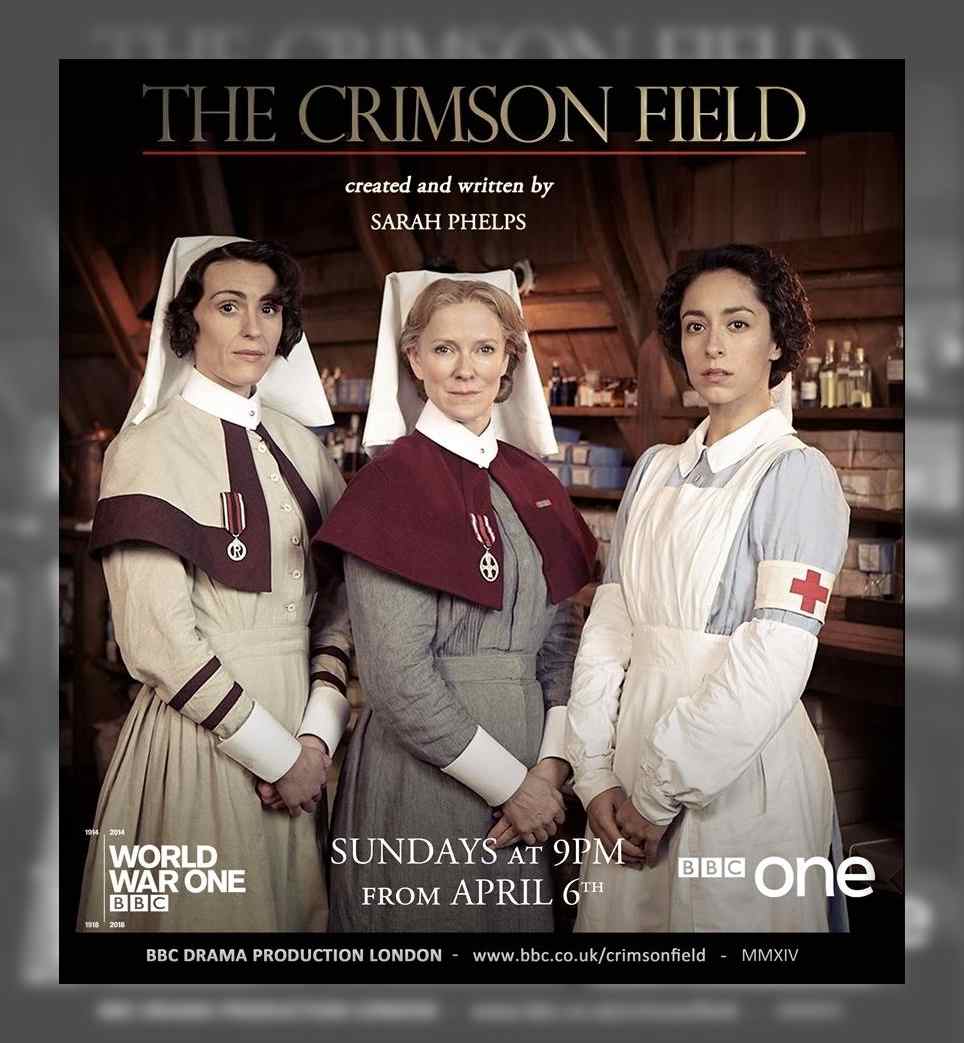
I dutifully watched UNC TV's June 21 – July 26 airing of The Crimson Field, BBC One's 2014 6-part drama about the lives of medics and patients at a World War I field hospital in France. More impressive to me than any of its story lines about the well-worked Great War are the commanding performances of three of the show's actors playing nurses. Creating memorable characters are: Oona Chaplin as Kitty Trevelyan, Alice St. Clair as Flora Marshall, and Kerry Fox as Sister Margaret Quayle.
The book and its movie
By Morris Dean
In Chapter 10 of what was until recently Harper Lee’s only novel (1960), Atticus Finch tells his 12-year-old son Jem that “it’s a sin to kill a mockingbird,” and the seriousness of this injunction is emphasized by the next sentence:
Experience of individuation
By Bob Boldt
I find Elizabeth Bishop’s “In the Waiting Room” [text provided below] to be a wondrous, amazing poem for many reasons. First I enjoy narrative poetry—poems that tell a story. I especially enjoy this aspect in nearly all of Bishop’s work that I have read. One of the things I most admire is her ability to express in familiar terms the sometimes intangible experiences that occur. Often her poems express commonplace, banal experiences we all share but expressed with such perception, eloquence, and insight that we understand things in a new, deeply moving way. Other times she may choose as the subject of her poems a thing that is not all that accessible or easily comprehensible, as in “In the Waiting Room.”
In persona sororitas
By Bob Boldt
[Submitted to Bishop Emil Frank on November 13, in the year of our Lord 2013 by His obedient servant Sister James, Principal of The Sisters of Charity School of New York (Retired)]
Many years ago, an incident occurred that has weighed upon me ever since. I feel that I must reveal to you the personal conclusions I have arrived at, now that I am about to meet The Blessed Bridegroom.
You need to lose it before you watch this movie*
By Morris Dean
During lunch yesterday, I said to my wife, "I think I'll review that movie we watched last night."
"What movie was that? I can't remember it."
They never saw him coming
By Morris Dean
The Drop (2014, directed by Michaël R. Roska) takes place in Brooklyn, and the title refers to the practice of organized criminals of depositing illegal takings in a designated bar for later pickup. The designated bar in this case is "Cousin Marv's," which used to actually belong to Marv (played by James Gandolfini in his last feature film). It belonged to him, that is, until some Chechen mobsters muscled him out. He just works there now, and Bob (played by Tom Hardy) is a bartender.
A flawed, personal review
By Bob Boldt
[Author’s Note: This review is a further exploration of the subject of Morris Dean’s detailed examination of the 2014 film Calvary, starring Brendan Gleeson. A reading of his review will help readers who have seen the film remember salient details. I hope that my review will encourage a continuing conversation about this important artistic work.
I also hope that people who have not seen the film will excuse me for a spoiler or two included in this review. I don’t think people should read reviews of movies before seeing them and I don’t really write movie reviews for people who have not already seen the film.]
The past revisited and restored?
By Jonathan Price
The 2015 film Woman in Gold (directed by Simon Curtis) is based on a true story and retells it with some detail, intelligence, and passion. At the center of the story is an actual portrait by an Austrian painter of the early twentieth century, Gustav Klimt, of a friend and patron, Adele Bloch-Bauer, surrounded by ornamentation in shimmering gold.
An exposé
By Morris Dean
Going Clear: Scientology and the Prison of Belief (2015 documentary directed by Alex Gibney) aired on HBO on March 29, and my wife and I watched our recording of it this week. Wow was my reaction – and I'm not alone: according to Wikipedia, when the film was shown at the Sundance Film Festival, the audience gave it a standing ovation ("unusual for a Sundance presentation").


.jpg)