Welcome statement


“Parting Words from Moristotle” (07/31/2023) tells how to access our
archives of art, poems, stories, serials, interviews, travelogues….
Showing posts with label ethics. Show all posts

Friday, March 24, 2023

As Susan Spoke

Still She Speaks:
more moral tales

By Susan C. Price

[Susan “spoke” today’s column 10 years ago tomorrow, on May 25, 2013. It was titled Fourth Monday Susan Speaks. It’s still rewardingly readable and thought-provoking, and still interesting in conveying Susan’s circumstances at the time.]

The following made me think that:
a. what is so simple to me is NOT CLEAR to many,
b. maybe none of this...life...is simple,
c. i have no business discussing ethics....

Monday, November 15, 2021

Goines On: Ethical qualms

Click image for more vignettes
On his way to have blood drawn for his annual health exam, Goines recalled a horrible thought he had entertained when he ate that curried chicken the day before – of those helpless, innocent chickens caged up, overfed, injected with whatever, deprived of light and exercise (not to mention freedom), for the sole purpose of being eaten, or of laying eggs – and he grieved anew at their plight, wondering how frightfully they perceived it. Of course (or hopefully) not as frightfully as a human would perceive it, because a chicken’s brain didn’t seem capable of supporting the psychology. Psychology … the word’s root was psyche... soul.

Friday, September 11, 2020

Feral Pigs: A Philosophical Nightmare…

for a non-hunting animal rights advocate

Part Three


By Paul Clark (aka motomynd)

Taking up arms, or not, was now a serious moral dilemma. So…back to Google and YouTube to see how one might go about shooting a few pigs. After watching just a couple of video clips I realized it might be a good deal more exciting than I at first imagined:

Monday, September 7, 2020

Feral Pigs: A Philosophical Nightmare…

for a non-hunting animal rights advocate

Part Two


By Paul Clark (aka motomynd)

Wild hog 101: Let’s start at the beginning.
    As detailed in Part One, my friend’s farm had recently suffered an invasion of feral pigs – also colloquially called wild hogs or wild boars. Like most non-hunters, I was oblivious that feral/wild pigs/hogs were a problem. But I quickly learned that my friend’s farm was on the cutting edge of an ecological disaster now sweeping through Virginia and North Carolina – and much of the rest of the country – having long since overwhelmed the rest of the Southeast.

Saturday, September 5, 2020

Feral Pigs: A Philosophical Nightmare…

for a non-hunting animal rights advocate

Part One


By Paul Clark (aka motomynd)

When the text came in from my old friend Lee, I wondered if it was a prank. “Neighbors tell me wild hogs are trying to take over my farm up there. You’re closest, could you go by and shoot them?”

Saturday, December 29, 2018

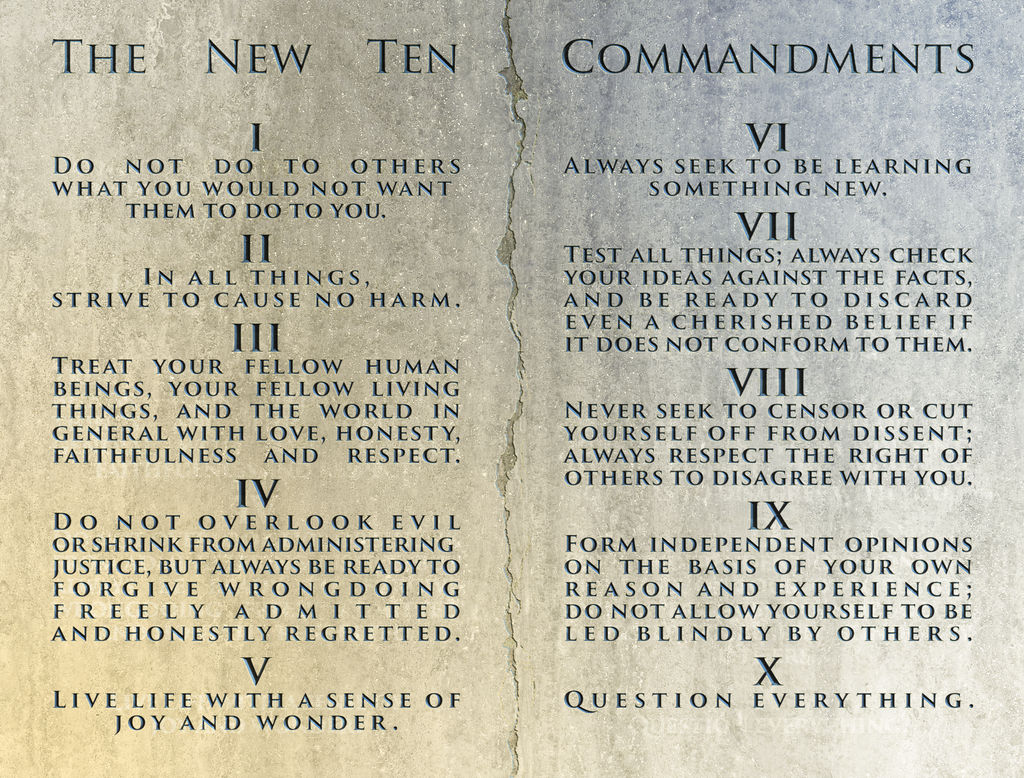
Eleven Years Ago Today: My “New Ten Commandments” (second edition)

The New Ten Commandments
by Mitchell Lazear
By Moristotle

[Originally published on December 29, 2007, without an image.
    Original Note: After drafting the first version of this, on Wednesday (December 26, 2007), and publishing a slightly revised version the next day, I have continued to think about and revise it. I put a few changes into Thursday’s post later the same day and yesterday (complete with footnotes, which became harder and harder to read). I decided to go with “editions” instead and not use footnotes. And I have restored Thursday’s post to the way it was when I first published it.
    Though chastened initially “to recognize [the list’s] inadequacy,” I’m feeling better and better about it now, especially since I’ve received some strong endorsements from friends privately.
]


Friday, October 27, 2017

Eight Years Ago Today: Virtue its own reward

By Moristotle

[Originally published on October 27, 2009, not one word different, but another image has been added and a different image of Spinoza substituted.]

Having learned a great deal from neuroscientist Antonio R. Damasio’s 1999 book about consciousness, The Feeling of What Happens: Body, Emotion and the Making of Consciousness, I decided to read another of his books.

Tuesday, September 19, 2017

Correspondence: The sexes

Edited by Moristotle

[Items of correspondence are not attributed; they remain anonymous. They have been chosen for their inherent interest as journalism, story, or provocative opinion, which may or may not be shared by the editor or other members of the staff of Moristotle & Co.]

Interesting view of feminist philosophy, which seems to promise improvement, not only in the climate for women, but also in philosophical thinking itself: “Feminism and the Future of Philosophy” [Gary Gutting, NY Times, September 18]. Excerpt:

Thursday, April 16, 2015

Thor’s Day: Autonomy and altruism

Valuing autonomy for the least of these

By Kyle Garza

The self-made man is the American hero, an icon of personal autonomy that overcomes every obstacle in his way and flourishes despite opposition. Thomas Edison was frowned upon by his teachers due to his wandering mind, Walt Disney was told he lacked creativity, Elvis was told he couldn’t sing, and Michael Jordan was once cut by his high school basketball team. Yet all were still given the opportunity to strive to make something of themselves: truly, the American dream fully realized.

Thursday, August 21, 2014

Thor's Day: Biblical guidance

One of the author's favorite scenes,
looking down from Blowing Rock, North Carolina
Thank you, Bible scholars

By Craig Johnson

I'm writing to thank Opinion Page Bible scholars for educating us regarding God's law. I share their wisdom with as many people as possible. For example, when someone defends the homosexual lifestyle, I remind him that Leviticus 18:22 clearly declares it an abomination. End of debate.

Thursday, August 14, 2014

Thor's Day: A love ethic in practice

Celebrating life by helping others

By Joel Kleinberg

Years ago I decided to make people's lives happier, not harder. So I decided I'd never write letters of complaint, but rather I'd write "the boss" only to compliment exceptional service. Here is one of many notes written over the years that can serve as a format for yours:

Monday, April 22, 2013

Fourth Monday Susan Speaks

Working out

By Susan C. Price

Let me talk about a topic much less “freighted” than ethics…as part of my ongoing series, “Ok, I’m retired, what can i obsess about today?”
    Specifically, why does my energy/interest totally flag at EXACTLY 1 hour with Zumba class, and exactly 1.5 hours for Treadmill and Free Weights?

Wednesday, April 3, 2013

Ask Wednesday: Now, I ask you!

What's an ethical person to do?

By Morris Dean

For today's interview, I want to try something different. I want to interview you. If you agree to be interviewed, please leave a comment with your response to a multipart question I will pose about a recent situation I was involved in.

Monday, March 25, 2013

Fourth Monday Susan Speaks

more moral tales

By Susan C. Price

The following made me think that:
a. what is so simple to me is NOT CLEAR to many,
b. maybe none of this...life...is simple,
c. i have no business discussing ethics....

Monday, February 25, 2013

Fourth Monday Susan Speaks

Ethics again, sort of

By Susan C. Price

Ok, readers, this is probably it for me on the topic of ethics. I really did say all my tiny mind thinks about the topic the first time through, plus my comment in reply to loneliestliberal’s summarizing his dad’s World War II gasoline-rationing story, how his grandfather Vern refused a larger ration on the supposed grounds that his work was vital to the war effort, saying that “his needs were no more important than those of anyone else.” I replied that

Friday, February 1, 2013

Fish for Friday

Limerick of the Week:
Readers weren't asking to be given a choice,
But for months we've wanted a female voice.
    We asked and dealt,
    We touched and felt,
And all we're hearing now Susan's come's rejoice.

Monday, January 28, 2013

Fourth Monday Susan Speaks

What is ethics?

By Susan C. Price

What is ethics? Naturally, I begin with my ideas, ’cus they’re obviously s-o-o wonderful, as I was asked to write this column...Oh, the dog was too busy? Now I understand....
    Ethics is doing the right thing.
    To me there are two basic types of “right thing.” One, not doing bad. And two, actively doing good.


Wednesday, October 28, 2009

Spinoza's view of the Bible

Apropos my recent interchanges with some "Bible-believing Christians," I was struck by a paragraph in Chapter 7 of Antonio R. Damasio's book I quoted from yesterday:
For the [kind of salvation accessible to all through living "a virtuous life in a virtuous civitas, obedient to the rules of a democratic state and mindful of God's nature, somewhat indirectly, with the help of some of the Bible's wisdom"], Spinoza rejects biblical narratives as God's revelation, but endorses the wisdom embodied in the historical figures of Moses and Christ. Spinoza saw the Bible as a repository of valuable knowledge regarding human conduct and civil organization. [p. 274]
    Spinoza, this atheist with respect to the God of Abraham, was nevertheless plugging the Bible as a force for good in human affairs! (I wonder what the past two thousand years would have been like without the Bible. Too bad that that experiment can't be conducted.) The endnote was even more striking:
Here are Spinoza's words from A Theologico-political Treatise, 1670 (R. H. M. Elwes translation): "Before I go further I would expressly state (though I have said it before) that I consider the utility and the need for Holy Scripture or Revelation to be very great. For as we cannot perceive by the natural light of reason that simple obedience is the path of salvation, and are taught by revelation only that it is so by the special grace of God, which our reason cannot attain, it follows that the Bible has brought a very great consolation to mankind. All are able to obey, whereas there are but very few, compared with the aggregate of humanity, who can acquire the habit of virtue under the unaided guidance of reason. Thus if we had not the testimony of Scripture, we should doubt of the salvation of nearly all men."
    This deeply felt attitude gives the lie to the caricatures of Spinoza as the devil incarnate. Late Spinoza advised those around him, who were mostly Christian, to remain within their church, largely the Protestant church. He urged children to attend Mass, and he himself heard sermons by Colerus, the Lutheran pastor who moved into the house Spinoza once rented in the Stilleverkade and became first his friend, then his biographer. Spinoza did not have faith in a provident God or in eternal life, but he never mocked the faith of others. In fact, Spinoza was extremely careful with the faith of the unlearned. He only discussed religion with his intellectual colleagues....[p. 330]
That stung me into self-awareness. As I was mocking my colleagues' religious beliefs last week, I knew I was doing it and didn't like that I was doing it, but I felt a sort of compulsion to proceed. I'd like to think now that if I'd read this from Damasio beforehand, I'd have held back, tried to emulate Spinoza. What was my need to not just smile and ignore their "sales pitches" but to ridicule and demean them? Why did I need to do that?
    I knew that I was being potentially hurtful; I had no sense that anything good for them could come from my responding as I did. I was vaunting something of my own, at their expense. They obviously feel they need their scriptures to live their virtuous lives (in Spinozian terms, if not in theirs); I don't think I need them to live mine.
    If I will criticize religion, let me not do it in such personal terms. Or, if I must discuss religion with its adherents, let me moderate my tone, be more civil, more forbearing. Like me, they too (I must assume) are doing the best they can.

Tuesday, October 27, 2009

Virtue its own reward

Having learned a great deal from neuroscientist Antonio R. Damasio's 1999 book about consciousness, The Feeling of What Happens: Body, Emotion and the Making of Consciousness, I decided to read another of his books.
    Looking for Spinoza: Joy, Sorrow, and the Feeling Brain (2003) explores, among other things, the role of feelings in ethics and other social arrangements. Damasio brings the philosopher Baruch Spinoza (1632-1677) into the discussion because of his profound insights into the subject in his Ethics (Treatise on the Improvement of the Understanding [Tractatus de intellectus emendatione])1.
    I took special note of Spinoza's role in the story for two reasons. First, I have to confess that even as a philosophy major at Yale, I read nothing of Spinoza as an undergraduate. Second, and more important, Spinoza had such unconventional views on God that he was actually expelled from the Jewish community in Holland and for this reason (according to Damasio) had such a "bad reputation" that his writings were largely ignored for a long time.
    Spinoza was not literally an atheist, but he certainly was with respect to the conventional divinity of the Judeo-Christian-Islamic tradition:
God has not revealed himself to humans in the ways portrayed in the Bible. You cannot pray to Spinoza's God. [p. 273]
Ethics derived from biology, from feeling. Damasio quotes Proposition 18 in Part IV of Spinoza's Ethics:
"...the very first foundation of virtue is the endeavor (conatum) to preserve the individual self, and happiness consists in the human capacity to preserve its self2"....
    At first glance the words sound like a prescription for the selfish culture of our times but nothing could be further from their real meaning. As I interpret it, the proposition is a cornerstone for a generous ethical system. It is an affirmation that at the base of whatever rules of behavior we may ask humanity to follow, there is something inalienable: A living organism, known to its owner because the owner's mind has constructed a self, has a natural tendency to preserve its own life; and that same organism's state of optimal functioning, subsumed by the concept of joy, results from the successful endeavor to endure and prevail. Paraphrased in deeply American terms I would rewrite Spinoza's proposition as follows: I hold these truths to be self-evident, that all humans are created such that they tend to preserve their life and seek well-being, that their happiness comes from the successful endeavor to do so, and that the foundation of virtue rests on these facts. Perhaps these resonances are not a coincidence. [pp. 170-171]

Spinoza's best-known recommendation for achieving a life well lived came in the form of a system for ethical behavior and a prescription for a democratic state. But Spinoza did not think that following ethical rules and the laws of a democratic state would be sufficient for the individual to achieve the highest form of contentment, the sustained joy that he equates with human salvation....Many human beings require something that involves, at the very least, some clarity about the meaning of one's life....
    ...the yearning is a deep trait of the human mind. It is rooted in human brain design and the genetic pool that begets it, no less so than the deep traits that drive us with great curiosity toward a systematic exploration of our own being and of the world around it...The same natural endeavor of self-preservation that Spinoza articulates so transparently as an essence of our beings, the conatus, is called into action when we are confronted with the reality of suffering and especially the reality of death, actual or anticipated, our own or that of those we love....
    ...From this perspective, any project for human salvation—any project capable of turning a life examined into a life contented—must include ways to resist the anguish conjured up by suffering and death, cancel it, and substitute joy instead3....[pp. 268-271]
    You need not be in fear of...God because he will never punish you. Nor should you work hard in the hope of getting rewards from him because none will come. The only thing you may fear is your own behavior. When you fail to be less than kind to others, you punish yourself, there and then, and deny yourself the opportunity to achieve inner peace and happiness, there and then....Spinoza's salvation—salus—is about repeated occasions of a kind of happiness that cumulatively make for a healthy mental condition....[p. 273]
_______________
  1. In the Stanford Encyclopedia of Philosophy: Spinoza's Psychological Theory.
        Damasio points out that Spinoza was the source of many of Montesquieu's ideas, which greatly influenced the United States Constitution.
    Montesquieu's views on ethics, God, organized religion, and politics are through and through Spinozian and were, unsurprisingly, denounced as such. [p. 256]
  2. Note how diametrically opposite to this—how unethical—are our contemporary acts of suicide bombing.
  3. Powerful motives for religiously believing in an afterlife, however wistful the belief!