Welcome statement


“Parting Words from Moristotle” (07/31/2023) tells how to access our
archives of art, poems, stories, serials, interviews, travelogues….
Showing posts with label Charles Darwin. Show all posts

Monday, October 3, 2022

Animated spirits remembered

13 Years Ago Today

By Moristotle

[Published originally on October 3, 2009.]

Having found Poet’s Walk gentle and fairly level last Saturday, I took my wife there today—and Siegfried, who was thrilled by the “new book” (as my wife phrased it) of all the unfamiliar scents he could put his quivering nose to. He and I had to walk ahead so that he wouldn’t in his eagerness continually run into her. But once, when we got far enough ahead (only ten or fifteen yards) for him to feel some disquiet apparently, he stopped and sat to wait for her, and in so doing reminded me of Wally’s doing the same on an autumn walk in Duke Forest two or three years ago. (I thought I’d blogged about this, but if I did I couldn’t find the post, unless it was “In the woods,” but the incident isn’t mentioned. I remember now, and mention here, Wally’s animating spirit.)

Tuesday, September 19, 2017

Correspondence: The sexes

Edited by Moristotle

[Items of correspondence are not attributed; they remain anonymous. They have been chosen for their inherent interest as journalism, story, or provocative opinion, which may or may not be shared by the editor or other members of the staff of Moristotle & Co.]

Interesting view of feminist philosophy, which seems to promise improvement, not only in the climate for women, but also in philosophical thinking itself: “Feminism and the Future of Philosophy” [Gary Gutting, NY Times, September 18]. Excerpt:

Thursday, August 13, 2015

Thor's Day: On whose authority?

Whom do you trust?

By Morris Dean

The column on "Reflections on Galileo's middle finger" didn't mention that science too can and does become an authority for people. I myself am not a scientist and haven't done the investigations and experiments that evolutionary biologists, for example, have done. Am I no better off than a Christian, say, who puts his faith in the Bible as the "word of God"?

Wednesday, July 8, 2015

Ask Wednesday: What did Darwin say to read monkeys for?

...a modern continuation
of Darwin’s “M” project
[About  Frans de Waal2]
Edited by Morris Dean

On page 128 of Charles Darwin’s notebook “M” [of “metaphysical” considerations], Darwin wrote in the summer of 1838, when he had already formulated the thesis of common descent but not yet the mechanism of natural selection1:

Thursday, April 2, 2015

Thor's Day: No polite way

The Church of the Skyhook
Kareem Abdul-Jabbar had a heavenly move

From Wikipedia

[Daniel C. Dennett, in Darwin's Dangerous Idea*] uses the term "skyhook" to describe a source of design complexity that does not build on lower, simpler layers – in simple terms, a miracle.

Thursday, December 18, 2014

Thor's Day: Of a mystical bent

Rainer Maria Rilke
(1875-1926)
By Morris Dean

[Originally published on January 22, 2012.]

About three years ago, I included myself among “others of a mystical bent,” and I even quoted Rilke. Admitting to a mystical bent surprised me as much as quoting Rilke; I hadn’t meant to get into anything like that.

Thursday, October 9, 2014

Thor's Day: Natural selection

Charles Darwin (1809-1882)
A scientific myth

By Kyle Garza

The qualities of a good mythological tale are easily recognizable to anyone. Personified powers or forces like gods of war or love vie for power or control in a great cosmic hierarchy. Some rise and some fall, but progress is always being made. Today, we assume that in the sophisticated, intellectual culture of the 21st century, with our scientific advancement and progress, we have left these archaic beliefs in the superstitious dust where they belong.

Thursday, August 7, 2014

Thor's Day: A Christian-atheist conversation, Part 2

About Christianity’s non-“holy days”

By Kyle Garza & Morris Dean

[Sequel to “About animal rights”]

Kyle: Morris, you claimed in this column on June 5 (“Value experience for its own sake: It’s an art”) that a second flaw of Christianity is that it devalues experience that doesn’t occur on the “holy days.” You wrote that it implicitly demotes days that aren’t sabbaths (or Saint’s days, or other religious holidays) to a lesser status.

Sunday, February 16, 2014

Sunday Review: Questioning Darwin (TV documentary)

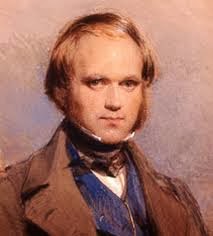
Charles Darwin at about the age of
his voyage on The Beagle
Thinking they've answered Darwin, rather

By Morris Dean

The fact that Charles Darwin's birthday was this week (he was born on February 12, 1809) sparked HBO's airing of 73-year-old British filmmaker Antony Thomas's one-hour documentary Questioning Darwin, which adroitly gives about equal coverage (1) to scientists and biographers appreciating Darwin's discovery of biological evolution's mechanism of natural selection and (2) to folks like Ken Ham, a founder of the "Answers in Genesis Creation Museum" in Kentucky, who are questioning Darwin. Of course, the creationists aren’t just questioning Darwin; they think they have definitively answered him by opposing the established, proven science of evolution with something they like to call “creation science*.”

Thursday, January 3, 2013

Thor's Day: The tie that binds

By Morris Dean

The English word "religion" derives through Old French from the Latin religiō, whose ultimate origins are obscure, but some modern scholars favor the derivation from ligare (bind, connect), probably from a prefixed re-ligare, i.e., re (again) + ligare, or "to reconnect." [Wikipedia]

Sunday, January 22, 2012

Mystical bent?

William James (1842-1910)
Yesterday, I referred to myself as "of a mystical bent." Admitting this surprised me as much as quoting Rilke; I hadn't meant to get into anything like that.
    Maybe I'm ready to try to say what spirituality (or being spiritual) means for me?
    Phrases like reverence for life [Albert Schweitzer], benevolence toward the humblest living creature [Charles Darwin], practice compassion [Dalai Lama], and The earth does not belong to us; we belong to the earth [Chief Seattle] come to mind.
    What can I say? Dwelling on such concepts in the awareness of nature and of our life on Earth casts a sort of numinous spell over me, a feeling that resonates with William James's characterization of mystical experience as "a deepened sense of significance." And, even when I'm not "having the experience," I try to maintain an abiding sense of the deep significance of things, the deep significance of choices and actions.
    James even excuses my inability to say much about this deep sense: "There is ineffability: the subject of a mystical experience cannot find words to describe it."
    Rainer Maria Rilke came close, very close indeed, in his Duino Elegies and other writings:
Silent friend of many distances, feel
how your breath enlarges all of space.
Let your presence ring out like a bell
into the night. What feeds upon your face

grows mighty from the nourishment thus offered.
Move through transformation, out and in.
What is the deepest loss that you have suffered?
If drinking is bitter, change yourself to wine.

In this immeasurable darkness, be the power
that rounds your senses in their magic ring,
the sense of their mysterious encounter.

And if the earthly no longer knows your name,
whisper to the silent earth: I'm flowing.
To the flashing water say: I am.
                [–Sonnets to Orpheus, XXIX, Stephen Mitchell's translation]

Thursday, June 9, 2011

Vacation travelogues aren't my thing

Bulgaria Road Map
(click to enlarge)
My wife and I visited Bulgaria last month and I committed myself to providing photographic documentation of the trip (in a brief post featuring our lunch on the Black Sea).
    I apologize for the delay and any disappointment it may have caused you. But the sword hanging over my head has adversely affected me more than the delay has affected you. Every time (but two) that I've had the impulse to blog about something more congenial to myself than doing a trip report, I've suppressed it.
    The first exception led to a post dated May 22 ("Not to be completely mistaken") that I wouldn't have published in the first place if I hadn't been weak and delirious from having contracted whatever bug had traveled home with my wife. I took that ironically named post down a few days later, when I was capable of perceiving its delusiveness. The second was yesterday's, when I'd finally had enough and said the hell with it.

Not only had I contracted some bug or other (which may not have been a Bulgarian exclusive, given that I've talked to several people here who had also been sick, with similar symptoms—sore throat at first, sinus congestion five or six days later), but I was tired as usual from long-distance travel.
    And I was tired especially from the stress of being chauffeured at high speed on Bulgarian roads, seriously fearing impairment or death every time we came up close enough to a slower vehicle ahead of us to touch if we'd reached our hand out before we swerved left and rushed past the hapless vehicle, whose driver was probably wondering "What the hell!" even before we swerved back in ahead of it.
    Somehow, I couldn't relax entertaining the bloody image of being laid up in a hospital in some small town in Eastern Europe, or thinking of my mortal remains' being shipped back to the United States (my cremation insurance doesn't apply elsewhere).
    I was also set back by the daunting task of selecting and editing the large number of photographs from the trip (not to mention having to deal with my office in-box, overflowing with an unusually high number of transactions that had arrived while I was gone for more than a week and a half from my 40-hour-a-week job).
    Only last Saturday did I finally finish renaming the last few scores of photos and begin to re-size and select a few of the ones I might use. I was too tired and annoyed by the whole thing to publish anything Saturday or Sunday, then everyday life caught up with me again and here it is Wednesday (no, Thursday—I wrote the above yesterday). On Tuesday, I had decided, why couldn't I do a partial report, using a few of the photos I did re-size? Okay, sounded good.

I'm not going to attempt a running account to accompany the photos, but be content to provide a short caption for each (as I hope you will be content with the result).
    Travelogues aren't my thing. I didn't know what road we were on most of time, being focused as I was on trying to compose my thoughts before dying. I didn't take notes about this thing or that, or write down descriptions or impressions it might have made on me. I just took a photograph from time to time.
    I confess, travel itself is as little my thing as writing it up is. Leave me at home with my wife and Siegfried, and I'm content. If I want to know something about a place, I'll read someone else's account of it, especially (in the case of Bulgaria) the blog of an American musician there, which contributed to my wife's planning our trip.  The blog's January 10 post, "On the March: Keep Weapons Holstered," with its photograph of a park fence fashioned out of rifles, led to our visiting Sofia's Military Academy park with our grandson, who told us that the rifles had been used in the 1885 War of Bulgarian Reunification.
    I trust that the blog's role in motivating my wife to visit Bulgaria and take me with her isn't the reason our son hasn't posted anything to it after the day he learned that she had purchased our Lufthansa tickets.

All of the photos were made with my wife's Nikon Coolpix P-100. We left my heavier DSLR at home. (Times of the clock shown in some of the photos are according to Eastern Standard Time, seven hours earlier than local time; sorry I forgot to reset the camera. In fact, I hadn't noticed that the camera even put dates and times on its photographs. I might have been able to turn that feature off; I'll have to check this out.)
 
A Shop Salad, or salad in the style of the Shopska region
around Sofia (I ate many salads like this in
my nine days in Bulgaria, perhaps my favorite dish)

A private garden in the village of German
(pronounced with a hard g, as in "gerbil"),
near Sofia

A street in Shumen, which we visited on our way to Varna

In Shumen, we listened to two or three of the competing
violinists as they practiced with their piano accompanist

The small, family-run hotel we stayed in near Varna,
about a quarter-mile from the Black Sea


A donkey cart in a small town on the way from
Varna to Balchik (note the wooden wheels)

My ticket to the University Botanical Garden in Balchik

A poster map of the University Botanical Garden in Balchik

Hats off to the university
for this poster
(despite its English, reminiscent
of instructions for a Japanese
Mickey Mouse watch)

We saw many balls of mistletoe like this along the Black Sea;
these we spotted in the University Botanical Garden

Flower beds in the University Botanical Garden,
looking toward the Black Sea

The flower beds from the Black Sea

Tulips in the University Botanical Garden

More Tulips
(I took many more photos of them than I'm posting here)

A lizard our son spotted in the cactus garden

Front entrance of Restaurant Corona, where we had lunch

A poster describing Restaurant Corona
(or Crown Restaurant)

Down to Queen Marie's garden

A waterfall in the University Botanical Garden

A pregnant cat we came across in Queen Marie's garden

My wife squealed with delight
when she came upon this whimsy
in Queen Marie's garden

View from Queen Marie's palace

A Red Bud tree in Queen Marie's garden,
looking down from her palace

Another Red Bud tree
(or was it the same one?)

The Restaurant Corona from Queen Marie's palace
(brightened, near the center)

Religious icons and other objects
on sale near Queen Marie's Palace
(opportunities to buy icons
abound in Bulgaria)

A commercial icon as well
(read the small print in the image to the right);
our waiter let us take the glass home with us
The sequel is available under the title "Bulgaria travelogue concluded."

Friday, March 26, 2010

Captain Skyhook

A skyhook, according to philosopher Daniel C. Dennett, is a source of design complexity that did not build on lower, simpler layers—in simple terms, a miracle. Dennett was apparently the first to apply the term to discuss a certain kind of retort to evolution. Writes Dennett:
The first use noted by the [Oxford English Dictionary] is from 1915: "an aeroplane pilot commanded to remain in place (aloft) for another hour, replies 'the machine is not fitted with skyhooks.'" The skyhook concept is perhaps a descendant of the deus ex machina of ancient Greek dramaturgy: when second-rate playwrights found their plots leading their heroes into inescapable difficulties, they were often tempted to crank down a god onto the scene, like Superman, to save the situation supernaturally. Or skyhooks may be an entirely independent creation of convergent folkloric evolution. Skyhooks would be wonderful things to have, great for lifting unwieldy objects out of difficult circumstances, and speeding up all sorts of construction projects. Sad to say, they are impossible. [p. 74]
Dennett uses the term extensively in his 1995 book, Darwin's Dangerous Idea: Evolution and the Meanings of Life (there are thirty-six page citations in the index, some of them spanning several pages of text).
    The danger in Darwin's idea that evolution by means of natural selection requires no skyhooks lay in the terrible quandary into which it pushed people who needed to believe in God. The project of believers who thought that truth was relevant to their belief came to be to try to prove either that species didn't really evolve in the first place or, if they did, that natural processes weren't adequate to explain their evolution. That is, God (or some skyhook, anyway) was necessary, after all.

Not all believers think truth relevant. As my friend Xavier commented once, about people who swear by astrology:
I've come to the realization that people's brains are wired in entirely different ways such that truth is as useless a concept to some as it is useful to others.
I suppose, for "full disclosure," that I'd better provide the rest of Xavier's comment, for he was counseling me on the futility of trying to convince certain people by appealing to reason:
As such, skepticism is either a personal endeavor or an endeavor pursued with like-minded individuals.
    To put it bluntly, when it comes to certain subjects, I just bite my tongue and see the conversations as an exploration into the human psyche.
Xavier appears to have developed better tongue-biting skills than I.

Sunday, March 14, 2010

Not ashamed, but would be....

A Darwinian anecdote:
...[S]ome of the foes of Darwin's dangerous idea have planted themselves firmly on the isthmus [that connects our species with all the others], like Horatio at the bridge, intent on preventing the idea from crossing over. The famous first confrontation was the notorious debate in Oxford's Museum of Natural History in 1860, only a few months after the initial publication of Origin, between "Soapy Sam" Wilberforce, Bishop of Oxford, and Thomas Henry Huxley, "Darwin's bulldog." This is a tale told so often in so many variations that we might count it a phylum of memes, not just a species [refers to the memetic theory of culture first proposed by Richard Dawkins, in his 1976 book, The Selfish Gene]. Here it was that the good bishop made his famous rhetorical mistake, asking Huxley whether it was on his grandfather's side or his grandmother's side that he was descended from an ape. Tempers were running high in that meeting room; a woman had fainted, and several of Darwin's supporters were almost beside themselves with fury at the contemptuous misrepresentation of their hero's theory that was being given, so it is understandable that eyewitnesses' stories diverge at this point. In the best version—which in all likelihood has undergone some significant design improvement over the retellings—Huxley replied that he "was not ashamed to have a monkey for his ancestor; but he would be ashamed to be connected with a man who used great gifts to obscure the truth"....[pp. 335-336, Daniel C. Dennett, Darwin's Dangerous Idea: Evolution and the Meanings of Life, 1995]

Friday, February 26, 2010

Egregious

In the mid-1800s, thousands of treasured documents vanished from the Institut de France, stolen by Italian mathematician, Count Guglielmo Libri, who fled to London in 1848 with a collection of 30,000 books and manuscripts, including those by Descartes, Galileo, Fermat, Leibniz, Copernicus, Kepler, and other scientific and mathematical giants. Among the audacious thief's trove were seventy-two letters by René Descartes, the founding genius of modern philosophy and analytic geometry.
    Yesterday's article in The New York Times, "Descartes Letter Found, Therefore It Is," by Patricia Cohen, reports that
one of those purloined letters...dated May 27, 1641, [concerning] the publication of Meditations on First Philosophy, a celebrated work whose use of reason and scientific methods helped to ignite a revolution in thought...has turned up at Haverford College in Pennsylvania.
    ...The document, experts say, reveals just how much Descartes tailored his writings to answer his contemporary critics. Frequently suspected of heresy, Descartes sent copies of his arguments to well-known theologians to gauge their opinions and answer their objections within his text.
    It would be disingenuous of me to say that I thought of Descartes last night while watching a 2009 TV program about Charles Darwin, who, more than 200 years after Descartes, also had reason to fear being thought a heretic, for I read Ms. Cohen's article only this morning. But I might very well have thought of Descartes, or of countless others who tailored their statements or their dates of publication (to follow their death, for example), in order to avoid censure (or premature death at the hands of inquisitioners).

The current meaning of the word "egregious" may have come about under the same pressure. The theologians and other powers that were (and largely still are) thought Descartes and Darwin outrageously bad or reprehensible. They were egregious in the sense of being outside the flock; "egregious" derives from Latin egregius, separated or chosen from the herd, from e-, ex-, out of, from + grex, greg-, herd, flock.
    But dictionary.com the other day pointed out that
Egregious was formerly used importing a good quality (that which was distinguished "from the herd" because of excellence [emphasis mine]).
    One would hope that the original meaning will come back. But if herd members can compliment Descartes now (assuming that they've heard of him), it's largely because he has been dead for almost 400 years. Many people still have trouble with Darwin. And look how egregious in the bad sense Richard Dawkins is considered to be. He's just too alive in his distinction from the herd of people who still reject evolution.

Friday, November 13, 2009

Unsettled question

One of my far-flung correspondents writes:
In 6th or 7th grade, I was asked what I would do when I die and meet Jesus. Well, obviously if I am actually face-to-face with him, then it would not be a question of believing or not. But since that little fantasy is not actually going to occur, I am not too worried about it. We will all be <ahem> dead; we non-believers won’t have the satisfaction (?) of knowing we were "right" and believers won’t have the disappointment of realizing they were wrong.
    It's not like they'd apologize for their decades of trying to proselytize us. I’m sure that if in death they could look around and see the absolute, utter nothingness, they would still find some way to rationalize that there is a God and that heaven will come, but there must be some...waiting period...or something....
Looking around in death and seeing utter nothingness sounds like an exquisitely terrifying mental hell, infinitely worse than being stuffed into an MRI tube without being told how long the procedure is going to take. Happily (so to speak), neither the believer nor the non-believer will suffer any awareness of nothingness, nor will either know which of them was right, for in death neither will be here (or anywhere else) to experience anything, any more than either was anywhere before birth to experience anything. While we don't count it sad to contemplate all of the beings who might have been born if only all of those eggs and sperm could have gotten together, our having been born brings with it the sadness of our death to come.
    But if any particular sadness of life "tipped the balance" for me it was not the sadness of any personal misfortune, but the general sadness of the food chain, the contemplation that some living creatures get eaten so that other living creatures may live a while longer. The idea that some divine being created such a world was (and remains) so utterly repugnant to me, there was no chance that I, with my exquisite sense of justice for all, could continue to believe in the supposed being who created it. For me and my belief, it's really as simple as that.
    My correspondent reminds me that it was apparently something like that for Charles Darwin, who seems to have left for the voyage on The Beagle a Christian but after seeing "the survival of the fittest" in action couldn't believe that a loving God could be behind it.

If Jesus Christ had a hole in his own moral philosophy, this might have been it. At any rate, to the best of my recollection of the Gospels, all of his reported teachings on compassion were on behalf of humans. His heart seemed not to have been broken by the sacrifice of animals on the cruel altar of worship.
    You might have thought that the Son of the Creator of the Universe wouldn't have had such a myopic, parochial valuation of Creation. Jesus seems to have been a human being even more of his times than we might have thought, however revolutionary his doctrine of human love.

Saturday, October 3, 2009

Animated spirits remembered

Having found Poet's Walk gentle and fairly level last Saturday, I took my wife there today—and Siegfried, who was thrilled by the "new book" (as my wife phrased it) of all the unfamiliar scents he could put his quivering nose to. He and I had to walk ahead so that he wouldn't in his eagerness continually run into her. But once, when we got far enough ahead (only ten or fifteen yards) for him to feel some disquiet apparently, he stopped and sat to wait for her, and in so doing reminded me of Wally's doing the same on an autumn walk in Duke Forest two or three years ago. (I thought I'd blogged about this, but if I did I couldn't find the post, unless it was "In the woods," but the incident isn't mentioned. I remember now, and mention here, Wally's animating spirit.)
    Near the end of Poet's Walk (or the beginning, depending on where you start), there's a "reflection pond" so picturesque that I wished I'd brought my camera (and would return with it the next morning):


And also at the end (or the beginning), there's a display with a quotation from Emerson appropriate to my reflections on last week's walk and talk here:


The first two lines appear in Emerson's poem "Threnody,"1 a meditation on the loss of his animated five-year-old son Waldo to scarlet fever (1842), but the four lines together are from the little poem "Nature," published in his Essays: Second Series (1844):
The rounded world is fair to see,
Nine times folded in mystery:
Though baffled seers cannot impart
The secret of its laboring heart,
Throb thine with Nature's throbbing breast,
And all is clear from east to west.
Spirit that lurks each form within
Beckons to spirit of its kin;
Self-kindled every atom glows,
And hints the future which it owes.
[p. 539, Library of America edition
of Emerson's Essays and Lectures
]
Again, "the only 'animated spirits' that we have any experience of" are those of Nature, and Ralph Waldo Emerson, writing before the publication of Darwin's Origin of Species, seemed to know it already2.
_______________
  1. P. 120, Library of America edition of Emerson's Collected Poems & Translations.
  2. "1841: First series of Essays published in March, and aunt, Mary Moody Emerson, pronounces it a 'strange medly of atheism and false independence'...," p. 1301, Chronology in Library of America edition of Emerson's Essays and Lectures

Thursday, September 17, 2009

The evidence for evolution

I speak of evolution as a fact. I do so, of course, because it is. And most of my readers understand that. But in case I should be visited by someone not yet in the know, I have good news today of an informative book on the subject, published this very month, Richard Dawkins's:

Extract from Chapter One

Evolution is an inescapable fact, and we should celebrate its astonishing power, simplicity and beauty. Evolution is within us, around us, between us, and its workings are embedded in the rocks of aeons past. Given that, in most cases, we don’t live long enough to watch evolution happening before our eyes, we shall revisit the metaphor of the detective coming upon the scene of a crime after the event and making inferences. The aids to inference that lead scientists to the fact of evolution are far more numerous, more convincing, more incontrovertible, than any eyewitness reports that have ever been used, in any court of law, in any century, to establish guilt in any crime. Proof beyond reasonable doubt? Reasonable doubt? That is the understatement of all time.

That comes from a longer extract at The Times Online.

Listen to Dawkins talk about the book.

Tuesday, September 15, 2009

Charles Darwin film "too controversial for religious America"?

I read the news today, oh boy, about a British film that failed to make the grade. It's about Charles Darwin and hasn't found a distributor in the United States supposedly because his theory of evolution is "too controversial for American audiences." So says its producer, Jeremy Thomas, the Oscar-winning producer of "Creation," according to Telegraph.co.uk:
US distributors have resolutely passed on a film which will prove hugely divisive in a country where, according to a Gallup poll conducted in February, only 39 per cent of Americans believe in the theory of evolution.
    Movieguide.org, an influential site which reviews films from a Christian perspective, described Darwin as the father of eugenics and denounced him as "a racist, a bigot and an 1800s naturalist whose legacy is mass murder." His "half-baked theory" directly influenced Adolf Hitler and led to "atrocities, crimes against humanity, cloning and genetic engineering," the site stated.
    The film has sparked fierce debate on US Christian websites, with a typical comment dismissing evolution as "a silly theory with a serious lack of evidence to support it despite over a century of trying."
This news is rather sad. Mr. Thomas is further quoted as saying:
The film has no distributor in America. It has got a deal everywhere else in the world but in the US, and it's because of what the film is about. People have been saying this is the best film they've seen all year, yet nobody in the US has picked it up.
    It is unbelievable to us that this is still a really hot potato in America. There's still a great belief that He made the world in six days. It's quite difficult for we [sic] in the UK to imagine religion in America [and quite difficult for some of us who live here]. We live in a country which is no longer so religious. But in the US, outside of New York and LA, religion rules.
    Charles Darwin is, I suppose, the hero of the film. But we tried to make the film in a very even-handed way. Darwin wasn't saying "kill all religion," he never said such a thing, but he is a totem for people.
A day in the life of America? One hopes that Mr. Thomas is merely exploiting America's embarrassing tendency to blow its mind out in a Sunday School bus to try to gin up some publicity for the film when it does get released in the United States.

"Creation" stars Paul Bettany, the fine actor we all enjoyed as the imaginary Princeton roommate of John Nash (played by Russell Crowe) in Ron Howard's 2001 four-Oscar-winning film, "A Beautiful Mind." "Creation" was directed by Jon Amiel and also stars Bettany's wife, Jennifer Connelly. They met in "A Beautiful Mind," for which Ms. Connelly portrayed John Nash's wife (and won an Oscar for it).